
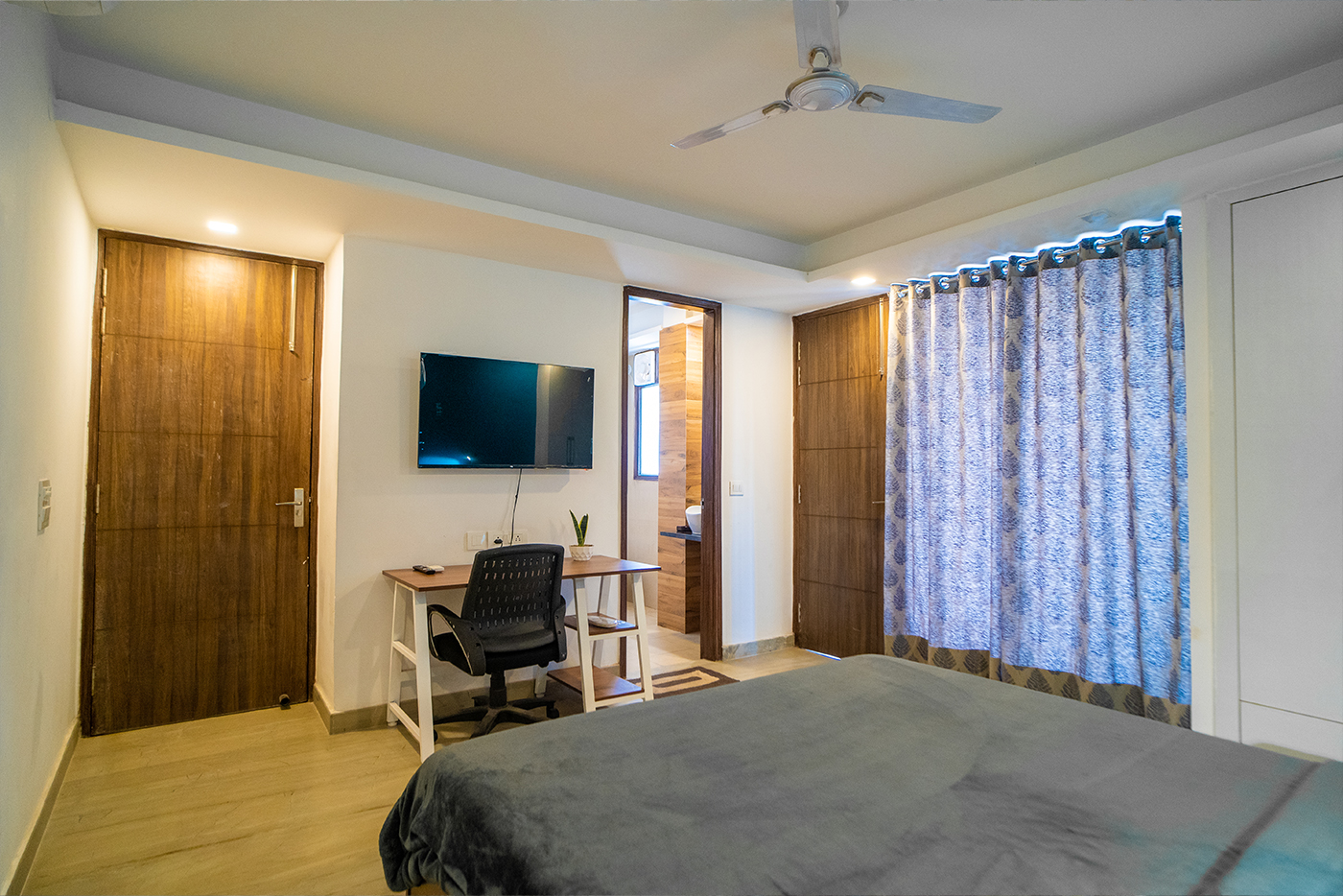
Why IT Professionals in Gurgaon Are Choosing Business Hotels Over PGs

For years, the paying guest (PG) accommodation was the default answer for IT professionals moving to Gurgaon for work — a shared room, a fixed set of house rules, and a monthly rent that felt reasonable on paper. But over the last few years, that default has been quietly shifting. A growing number of IT professionals, especially those on project-based assignments or short-to-medium relocations, are choosing business hotels and extended stay properties like Flxho instead. The reasons behind this shift say a lot about how work in the IT sector has changed, and about what people are now willing to trade off for comfort, flexibility, and time.
The Traditional PG Model and Its Limits
PGs became popular in cities like Gurgaon because they solved a real problem: affordable, semi-furnished accommodation for young professionals moving to a new city without the burden of a full apartment lease. For a fixed monthly rent, a PG offers a bed, shared common areas, and sometimes meals.
But the model comes with real trade-offs that matter more the longer someone stays. Shared rooms mean limited privacy and often unpredictable roommates. House rules around timing, guests, and common space use can feel restrictive after a long workday. Wi-Fi quality varies wildly and is rarely built for the kind of sustained video calls and large file transfers that IT work often demands. And the furnishing, cleanliness, and maintenance standards depend entirely on the specific PG operator, with little consistency across options.
For someone moving to Gurgaon for a short holiday or a first job with a tight budget, these trade-offs were often acceptable. For an IT professional on a defined project assignment — someone whose time and focus are directly tied to billable hours or delivery deadlines — they increasingly aren’t.
Why the IT Sector Specifically Is Driving This Shift
IT and IT-enabled services make up a significant share of Gurgaon’s corporate workforce, and the nature of this work has a few specific characteristics that make business hotels a better fit than PGs.
Project-based deployments are common. IT consultants and engineers are frequently sent to client sites or delivery centers for defined periods — often a few weeks to a few months — rather than being permanently based in one city. This makes long-term lease commitments impractical, while a PG’s monthly-minimum structure doesn’t offer meaningfully better value than a well-priced extended stay hotel.
Remote and hybrid work demands better infrastructure. A stable internet connection isn’t optional for IT professionals — it’s the baseline requirement for doing the job at all. Business hotels and extended stay properties are generally built around dependable, high-speed connectivity, whereas PG Wi-Fi is often shared across many residents with no guaranteed bandwidth.
Odd working hours are normal. IT professionals frequently work across time zones, supporting international clients or handling on-call responsibilities outside standard hours. PGs, with their shared spaces and house rules, aren’t always built to accommodate someone who needs quiet, uninterrupted space at 2 a.m. for a client call.
Company reimbursement policies increasingly support this. As more companies formalize travel and relocation allowances for project-based staff, business hotel and extended stay bookings have become easier to justify and expense compared to informal PG arrangements that don’t always come with proper invoicing.
What Business Hotels and Extended Stay Properties Offer Instead
Properties like Flxho are designed specifically around the gap that PGs leave open — offering the privacy of an individual room, the consistency of hotel-grade service, and pricing that becomes genuinely competitive once you look at weekly or monthly rates rather than comparing a single night to a month of PG rent.
Private, self-contained rooms. No shared bedrooms, no negotiating bathroom schedules with strangers — just a private space that’s entirely the guest’s own for the duration of their stay.
Dependable connectivity. High-speed Wi-Fi built for video calls, large uploads, and continuous work, rather than a shared home connection stretched across a dozen residents.
Kitchenette and laundry access. Many extended stay hotels, including Flxho, include in-room or on-site kitchenette and laundry facilities, closing much of the practical gap that used to make PGs feel more “livable” than hotels for longer stays.
Flexible booking terms. Instead of the rigid monthly lock-in typical of PG agreements, extended stay hotels generally allow guests to extend, shorten, or adjust their stay with far less friction — a meaningful advantage for IT professionals whose project timelines can shift with little notice.
Professional service standards. Housekeeping, security, and maintenance are handled to a consistent standard, without depending on the individual practices of a PG owner or caretaker.
The Cost Comparison Isn’t as One-Sided as It Looks
On the surface, PGs often look cheaper, with monthly rents that can undercut a hotel’s standard nightly rate multiplied out over 30 days. But this comparison misses how extended stay pricing actually works. Properties like Flxho price monthly stays very differently from nightly bookings, often bringing the effective daily cost down to a level that’s genuinely comparable to, or only modestly above, PG rents — while including services (housekeeping, security, connectivity, flexibility) that would cost extra or simply not exist in a PG setup.
When IT professionals actually run the numbers for a two- or three-month project stay, factoring in the value of privacy, reliable internet, and not having to manage groceries or shared chores, the gap often narrows considerably or disappears entirely.
Who This Shift Is Most Relevant To
This move away from PGs toward business and extended stay hotels is most visible among a specific set of IT professionals:
- Consultants and engineers on client-site deployments lasting a few weeks to a few months
- Employees relocating for a new role who need a comfortable, private base while they search for permanent housing
- Remote-first employees temporarily required on-site, who need to maintain the same work setup they’d have at home
- Contractors and freelancers working with multiple clients in Gurgaon over a defined engagement period
- Teams sent for on-site project delivery, where a group of colleagues may book several rooms in the same property for the duration of a project
What This Means for Gurgaon’s Accommodation Market
This shift reflects something broader about how IT work itself has changed. Project timelines are shorter and more variable, remote work has raised the baseline expectation for connectivity and workspace quality, and companies are increasingly willing to support better accommodation as part of retaining talent on demanding assignments. PGs still serve a purpose, particularly for long-term residents on tighter budgets who prioritize low cost above all else. But for IT professionals whose stay is temporary, whose work depends on connectivity and quiet, and whose time is genuinely valuable, business hotels and extended stay properties like Flxho are increasingly the more sensible choice.
Final Thoughts
The choice between a PG and a business hotel used to be a simple trade-off between cost and comfort. That’s no longer entirely true. As extended stay pricing has matured and properties like Flxho have built offerings specifically around the needs of professionals on temporary assignments, the practical and financial case for choosing a business hotel over a PG has become far stronger — especially for IT professionals whose work depends on privacy, connectivity, and flexibility that traditional PG accommodation was never really built to provide.

0 Comments