
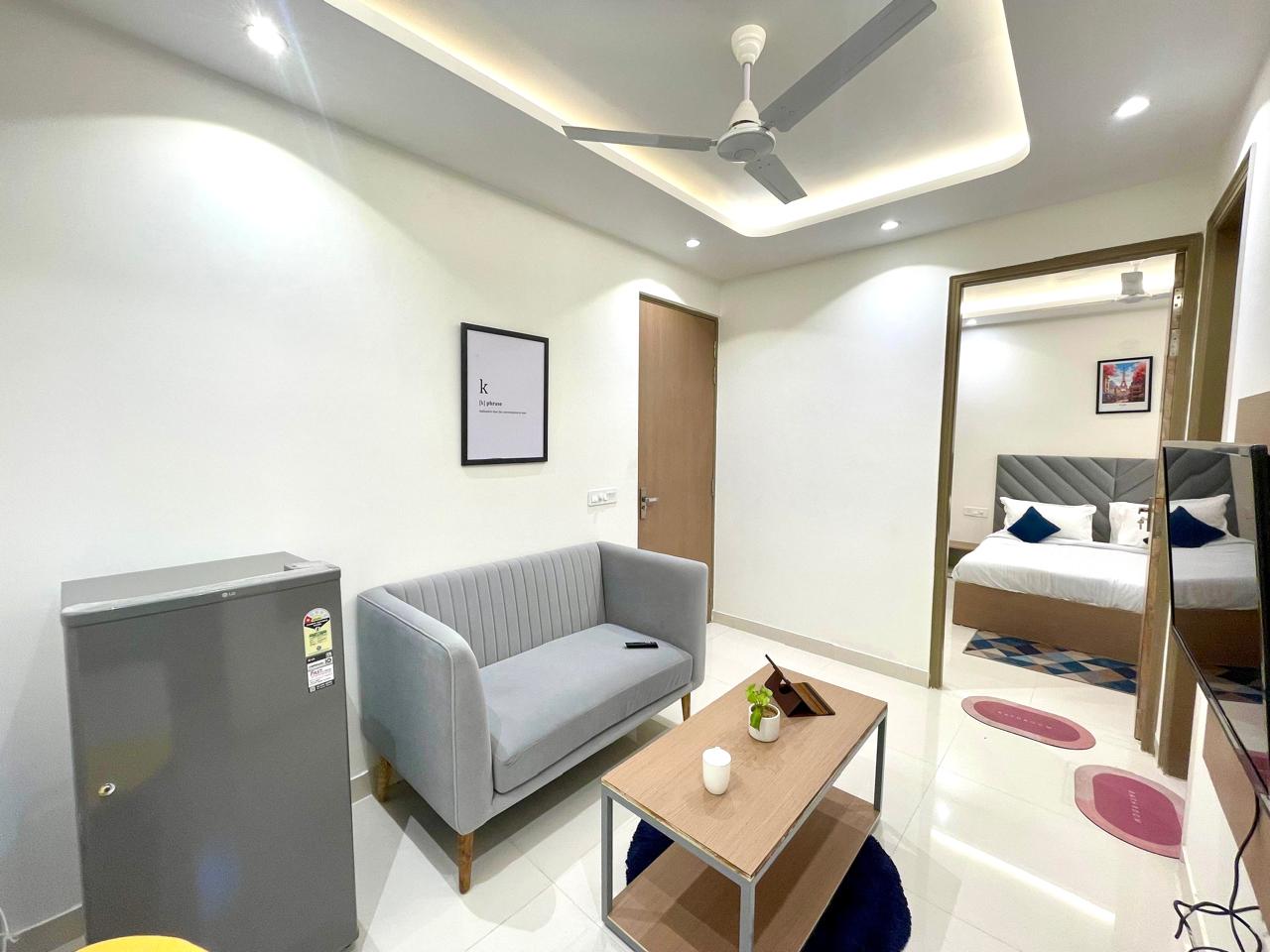
What Is a Hotel with Kitchenette and Why It’s Perfect for Long Business Trips

Anyone who has spent more than a week living out of a standard hotel room knows the specific kind of tiredness that sets in — not from the work itself, but from the logistics of daily life. Every meal means room service or eating out, every small craving means stepping outside, and the routine of home slowly becomes something you’re waiting to get back to rather than something you’re living. A hotel with a kitchenette, like the rooms Flxho is built around, solves exactly this problem, and it’s why the format has become especially popular among business travelers on longer assignments.
What Exactly Is a Hotel Kitchenette?
A kitchenette is a compact, functional cooking space built into a hotel room or suite — smaller and simpler than a full home kitchen, but enough to prepare real meals rather than just snacks. Typically, this includes a small refrigerator, a microwave or induction cooktop, basic cookware and utensils, a sink, and some counter and storage space for groceries.
It’s not designed to replace a full kitchen for elaborate cooking, but it’s more than enough for making breakfast, reheating leftovers, brewing coffee properly, or putting together a simple dinner after a long day of meetings. The goal is convenience and control over your own routine, not culinary ambition.
At Flxho, kitchenette rooms are designed with exactly this use case in mind — guests staying for days or weeks who want the option to eat on their own schedule without depending entirely on restaurants or room service.
Why Kitchenettes Matter More on Longer Trips
For a one- or two-night stay, a kitchenette adds little value — there’s no real need to cook when you’re only in a city briefly. But the equation changes dramatically as a trip stretches into a week, a month, or longer.
Eating out constantly gets old fast. Restaurant food, even good restaurant food, loses its appeal after enough repetition. Home-cooked meals — even simple ones — become genuinely valuable for both physical and mental wellbeing on an extended trip.
Cost adds up quickly. Three restaurant meals a day, every day, for weeks becomes a significant expense, even in a city with reasonably priced dining like Gurgaon. A kitchenette allows travelers to cook some or most meals themselves, cutting food costs substantially over a long stay.
Dietary needs and preferences are easier to manage. Business travelers with specific dietary requirements — whether for health, fitness, or personal preference — often struggle to consistently find suitable options when eating out for every meal. Having a kitchenette means being able to prepare food exactly the way you want it, every time.
It supports a more normal daily rhythm. Something as simple as making your own coffee in the morning or having a proper breakfast before an early meeting brings a sense of routine and control that’s easy to underestimate until you’re missing it on a long trip.
Who Benefits Most from a Kitchenette Room
While any traveler can appreciate the convenience, a few groups tend to benefit the most:
Consultants and project-based professionals on assignments running several weeks or months, for whom eating out at every meal becomes both expensive and exhausting over time.
Relocating employees who are using a hotel as a temporary base while searching for permanent housing, and who want to maintain something closer to a normal domestic routine during the transition.
Business travelers with dietary restrictions, including those managing health conditions through diet, following specific fitness-related eating plans, or simply preferring home-style food.
Families accompanying a relocating professional, where the ability to prepare familiar meals — especially for children — makes a real difference to how smoothly the transition goes.
Teams on extended on-site deployments, where the cumulative cost of feeding an entire team through restaurants for weeks can be considerable, and a shared kitchenette setup offers a more economical alternative.
Kitchenette Rooms vs. Standard Hotel Rooms
The difference becomes clear when you compare the day-to-day experience of each over a multi-week stay.
In a standard hotel room, every meal requires either leaving the property or ordering room service, both of which cost time and money that adds up daily. Storage for groceries or snacks is minimal or nonexistent. There’s little flexibility to eat on your own schedule, particularly around odd working hours or early morning starts.
In a kitchenette room, meals become optional rather than mandatory outings. Groceries can be bought in bulk and stored properly, cutting down on repeated trips. Odd hours are easy to accommodate — a working professional handling a late-night international call can still make a coffee or a snack without needing room service to be available. And the simple psychological benefit of having some control over your own food, even in an unfamiliar city, contributes meaningfully to comfort over a long stay.
What to Look for in a Good Kitchenette Setup
Not all kitchenette rooms are built the same way, and a few details are worth checking before booking, especially for longer stays:
- A proper refrigerator, not just a small minibar, with enough space for a reasonable amount of groceries
- A functional cooktop or induction plate, rather than just a microwave, for guests who want to prepare actual meals rather than reheat pre-made food
- Basic cookware and utensils provided as standard, so guests don’t need to purchase their own
- Adequate counter and storage space, since a cramped kitchenette can end up feeling more frustrating than convenient
- Easy access to a nearby grocery store or supermarket, which matters just as much as the in-room setup itself
Flxho’s kitchenette rooms are designed around these exact considerations, aiming to make self-catering genuinely practical rather than a token feature that looks good in a listing but doesn’t hold up in daily use.
Final Thoughts
A hotel with a kitchenette isn’t a luxury add-on — for anyone on a long business trip, it’s closer to a necessity. It restores a sense of normal daily routine, cuts down meaningfully on food costs, and gives travelers control over what and when they eat, which becomes increasingly valuable the longer a stay runs. For business travelers weighing their options in Gurgaon, choosing a property like Flxho that’s built specifically around this need can turn a long, tiring assignment into something far more manageable — and considerably more comfortable — than living out of a standard hotel room ever could.

0 Comments